


Common Laminating Materials For Wide-Format Laminating Machines And Key Selection Considerations
Aug 29, 2025
Lasciate un messaggio
1. Common Laminating Material Types for Wide-Format Laminating Machines
Laminating materials suitable for wide-format laminating machines should be selected based on laminating processes and application requirements with common types and their key characteristics as follows:
PET film (polyethylene terephthalate film) has high base material strength excellent high and low temperature resistance no easy deformation during long-term use and good surface flatness and can be made into transparent matte or special-function (such as anti-ultraviolet anti-static) models as needed which is suitable for scenarios requiring high laminating layer stability like outdoor advertising and industrial signage.
BOPP film (biaxially oriented polypropylene film) has low cost high transparency good flexibility and strong processing adaptability and is commonly used for laminating in non-harsh environments such as interior decorative paintings and posters but it has poor low-temperature resistance and is easy to brittle crack in low-temperature environments.
Matte film mostly uses PET or BOPP as base material and its surface is specially treated to show low-gloss effect which can reduce light reflection improve the visual texture and reading comfort of printed materials and is suitable for scenarios requiring high visual experience like book covers high-end catalogs and indoor display screens.
Scratch-resistant film has a wear-resistant coating (such as silicone coating polyurethane coating) attached to the substrate surface with hardness up to 2H or above which can effectively resist surface damage caused by scratches and friction and is commonly used in scenarios with frequent contact or easy wear like display panels furniture surfaces and electronic device casings.
Pre-coated film is a laminating material pre-coated with an adhesive layer (hot melt adhesive or pressure-sensitive adhesive) before leaving the factory which does not require on-site gluing and can be directly used with pre-coating laminating machines with common base materials being PET or BOPP and is suitable for scenarios requiring high laminating efficiency and environmental protection (some pre-coated films are solvent-free).
PVC film (polyvinyl chloride film) has extremely strong flexibility can fit irregular curved substrates and has good chemical corrosion resistance but poor high-temperature resistance (easy to soften when exceeding 60℃) which is mainly used for soft substrates (such as canvas light box cloth) or interior decorative laminating and it should be noted that some PVC films may release trace harmful substances at high temperatures making them unsuitable for food contact scenarios.
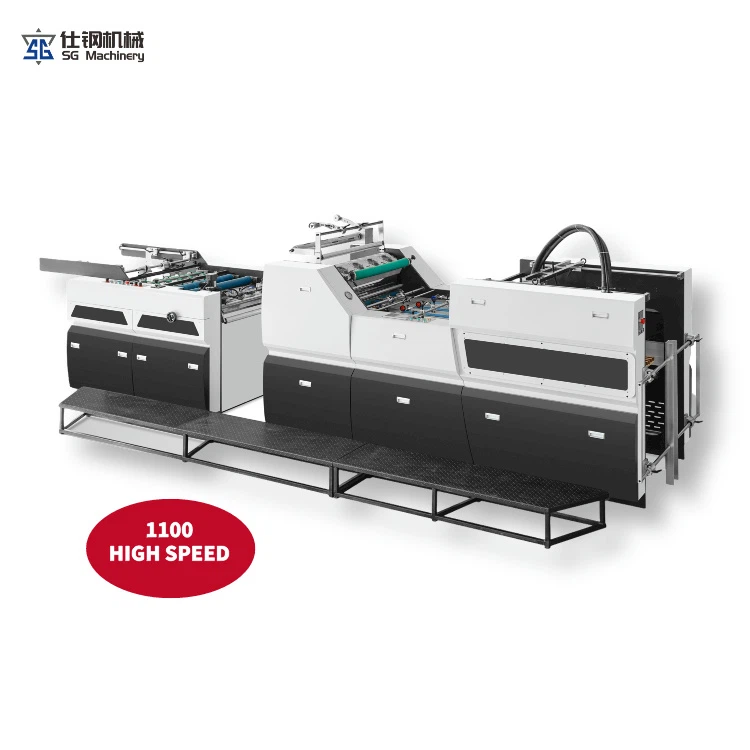
2. Key Factors to Consider When Selecting Laminating Materials
Adhesion requires selecting laminating materials with matching adhesion according to the surface characteristics (smoothness porosity) of the substrate for example choosing high-adhesion PET film or scratch-resistant film for smooth acrylic plates to prevent the laminating layer from falling off and choosing pre-coated film or BOPP film with strong adhesive layer permeability for porous kraft paper to ensure tight bonding while also considering the laminating process where hot lamination needs materials with strong hot melt adhesive adhesion and cold lamination needs materials with matching pressure-sensitive adhesive adhesion.
Weather resistance requires choosing materials with strong weather resistance (such as PET film scratch-resistant film) for outdoor scenarios whose anti-ultraviolet high and low temperature resistance (-30℃ to 80℃) and rain erosion resistance can prevent the laminating layer from aging and discoloration and choosing BOPP film or matte film with weak weather resistance for indoor scenarios (such as ordinary posters catalogs) to reduce costs.
Application requirements require giving priority to scratch-resistant film for scenarios with frequent contact (such as display panels furniture surfaces) to improve wear resistance choosing matte film for scenarios requiring high visual effects (such as high-end catalogs book covers) to reduce reflection selecting PVC film for soft substrates (such as light box cloth canvas) to match the flexibility of the substrate and choosing solvent-free PET pre-coated film or BOPP film with water-based adhesive for scenarios with high environmental protection requirements (such as children's products food packaging) to avoid the release of harmful substances.
Substrate physical properties require choosing strong non-breakable PET film or scratch-resistant film for thick substrates (such as thick metal plates wood boards) to prevent material breakage during laminating selecting materials with adhesive layers that will not damage the printed pattern (such as matte film pre-coated film with low adhesion strength) for substrates with printed layers to prevent printing color fading and picking flexible PVC film for easily deformable substrates (such as soft fabrics) to avoid substrate wrinkling after laminating.
Cost and process compatibility require choosing low-cost BOPP film suitable for cold lamination or pre-coating processes for ordinary short-term indoor application scenarios (such as temporary posters) selecting more expensive PET scratch-resistant film suitable for hot lamination processes for long-term outdoor or high-end application scenarios (such as outdoor billboards high-end furniture) and ensuring the selected material matches the process type of the existing laminating machine (for example pre-coated laminating machines can only use pre-coated film) to avoid lamination failure caused by equipment incompatibility.